Turn your mortgage into a wealth-building tool. Smith Manoeuvre strategies, tax-smart planning, and honest math from two Canadian mortgage strategists.
Northern Home Prices Rise on Supply Crunch Despite Sales Falling in Iqaluit
A 47-year-old government procurement officer in Iqaluit spent six months looking for a house to buy this spring and attended exactly two showings. Not because she was picky. Because two listings were all that appeared. She's back to renting at $3,400 a month in a building where three of eight units are vacant, not from lack of tenants, but because the landlord can't find tradespeople to repair the aging plumbing fast enough. That's what a market with falling sales actually looks like when the drop signals shortage, not cooling.
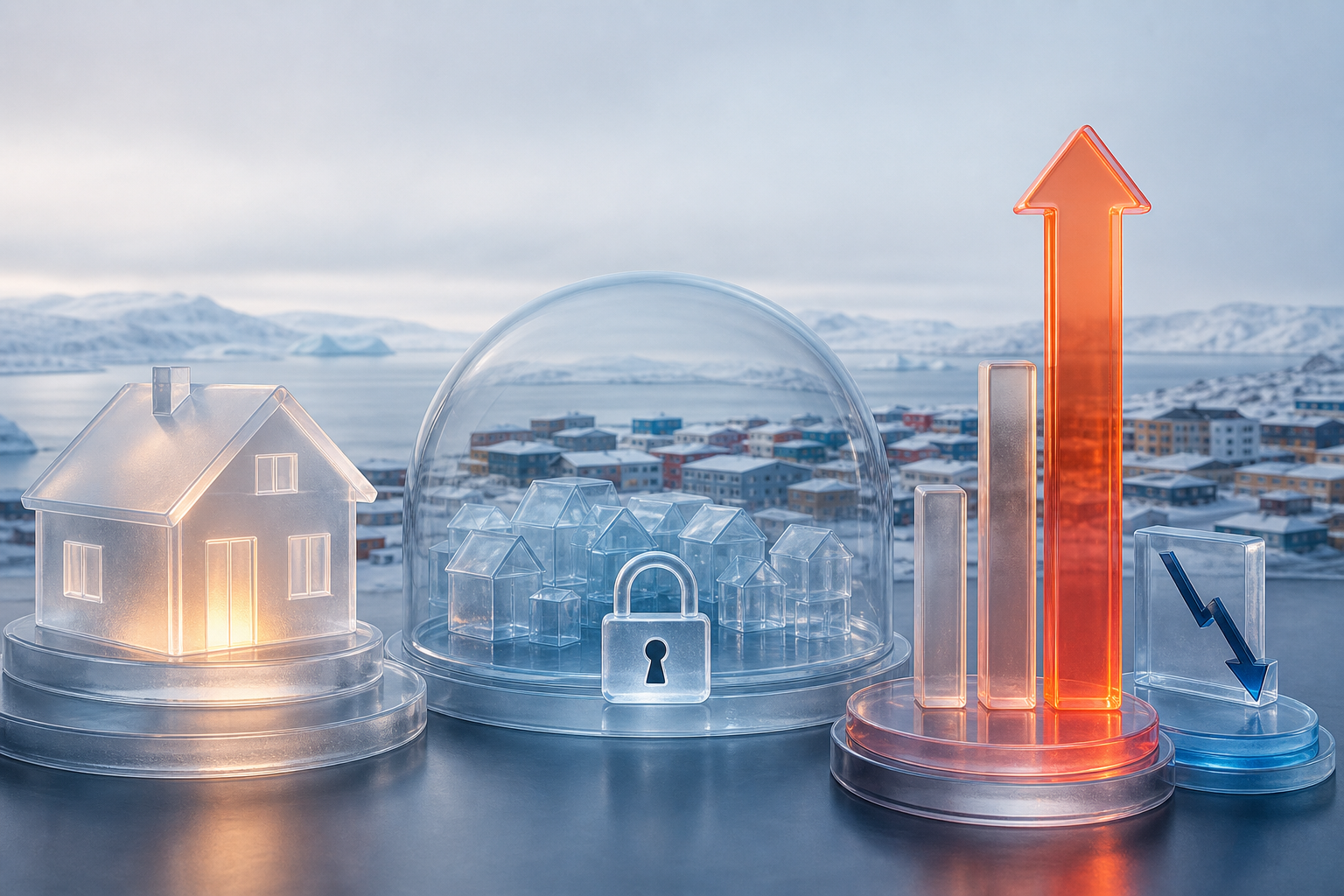
Across Canada's three territorial capitals, home prices continued their climb into mid-2026 even as sales activity diverged sharply. Whitehorse and Yellowknife saw buyers return after sitting out much of 2025, pushing transaction counts back toward pre-rate-hike levels. Iqaluit moved in the opposite direction: sales dropped further, continuing a multi-quarter slide. The common thread wasn't demand. It was inventory, or the near-total absence of it.
Why a sales decline can mean the opposite of affordability
In most Canadian cities, falling transaction volumes signal that buyers have stepped back, either priced out or waiting for better conditions. In Iqaluit, the logic inverts. Fewer sales mean fewer available properties, period. The city's housing stock is split between government-owned staff housing, aging rental blocks, and a thin layer of privately owned single-family homes. When nothing lists, nothing sells, and prices drift upward on the last comp anyone can find. Median single-family prices in Iqaluit now exceed $650,000, up from the low $600,000s a year earlier, despite the year-over-year sales count dropping by double digits.
The mechanics are straightforward. Iqaluit has no subdivision land ready to build on because extending water and sewage lines, called utilidors in permafrost regions, costs roughly $1.2 million per kilometer. The territorial government has announced new housing funding, but those units are years from completion and aimed primarily at rental. For a buyer trying to enter ownership, the market isn't tight. It's closed.
Whitehorse and Yellowknife: constrained, not frozen
Whitehorse recorded its strongest first half for sales since 2022, as buyers who had delayed purchases through the high-rate environment began moving. Prices held near record levels, average single-family homes still trade above $700,000, but at least transactions occurred. Yellowknife followed a similar path, with sales up meaningfully from the prior year's trough. Both cities remain in what real estate boards describe as "balanced to sellers' markets," a polite way of saying inventory is low enough that prices aren't negotiable.
The difference between these two markets and Iqaluit comes down to one factor: the ability to build, however slowly. Whitehorse and Yellowknife still have serviced lots, however expensive. Builders are completing projects, however delayed by the short construction season and the cost of shipping materials during the annual sealift window. Iqaluit has no such margin. When a property sells, it doesn't free up supply, it removes it.
The construction floor
Building costs in the North create an effective price floor that southern Canadian cities don't face. A modest three-bedroom home in Whitehorse costs $450,000 to build before land. In Iqaluit, the figure is closer to $600,000, driven by the realities of flying in skilled trades, ordering materials a year in advance for the summer sealift, and engineering foundations that won't shift as permafrost thaws. Climate change has added a "permafrost premium", engineers now assume higher movement, which means deeper piles and more contingency.
What keeps prices rising isn't speculative demand. It's the impossibility of expanding supply quickly enough to meet baseline need. A mining engineer earning $140,000 can carry a $650,000 mortgage. Whether that mortgage should be necessary to buy a 1,200-square-foot bungalow is a separate question, and one that falling sales in Iqaluit answer by default: if you can't find anything to buy, the price of what does exist becomes irrelevant.



A 47-year-old government procurement officer in Iqaluit spent six months looking for a house to buy this spring and attended exactly two showings. Not because she was picky. Because two listings were all that appeared. She's back to renting at $3,400 a month in a building where three of eight units are vacant, not from lack of tenants, but because the landlord can't find tradespeople to repair the aging plumbing fast enough. That's what a market with falling sales actually looks like when the drop signals shortage, not cooling.
Across Canada's three territorial capitals, home prices continued their climb into mid-2026 even as sales activity diverged sharply. Whitehorse and Yellowknife saw buyers return after sitting out much of 2025, pushing transaction counts back toward pre-rate-hike levels. Iqaluit moved in the opposite direction: sales dropped further, continuing a multi-quarter slide. The common thread wasn't demand. It was inventory, or the near-total absence of it.
Why a sales decline can mean the opposite of affordability
In most Canadian cities, falling transaction volumes signal that buyers have stepped back, either priced out or waiting for better conditions. In Iqaluit, the logic inverts. Fewer sales mean fewer available properties, period. The city's housing stock is split between government-owned staff housing, aging rental blocks, and a thin layer of privately owned single-family homes. When nothing lists, nothing sells, and prices drift upward on the last comp anyone can find. Median single-family prices in Iqaluit now exceed $650,000, up from the low $600,000s a year earlier, despite the year-over-year sales count dropping by double digits.
The mechanics are straightforward. Iqaluit has no subdivision land ready to build on because extending water and sewage lines, called utilidors in permafrost regions, costs roughly $1.2 million per kilometer. The territorial government has announced new housing funding, but those units are years from completion and aimed primarily at rental. For a buyer trying to enter ownership, the market isn't tight. It's closed.
Whitehorse and Yellowknife: constrained, not frozen
Whitehorse recorded its strongest first half for sales since 2022, as buyers who had delayed purchases through the high-rate environment began moving. Prices held near record levels, average single-family homes still trade above $700,000, but at least transactions occurred. Yellowknife followed a similar path, with sales up meaningfully from the prior year's trough. Both cities remain in what real estate boards describe as "balanced to sellers' markets," a polite way of saying inventory is low enough that prices aren't negotiable.
The difference between these two markets and Iqaluit comes down to one factor: the ability to build, however slowly. Whitehorse and Yellowknife still have serviced lots, however expensive. Builders are completing projects, however delayed by the short construction season and the cost of shipping materials during the annual sealift window. Iqaluit has no such margin. When a property sells, it doesn't free up supply, it removes it.
The construction floor
Building costs in the North create an effective price floor that southern Canadian cities don't face. A modest three-bedroom home in Whitehorse costs $450,000 to build before land. In Iqaluit, the figure is closer to $600,000, driven by the realities of flying in skilled trades, ordering materials a year in advance for the summer sealift, and engineering foundations that won't shift as permafrost thaws. Climate change has added a "permafrost premium", engineers now assume higher movement, which means deeper piles and more contingency.
What keeps prices rising isn't speculative demand. It's the impossibility of expanding supply quickly enough to meet baseline need. A mining engineer earning $140,000 can carry a $650,000 mortgage. Whether that mortgage should be necessary to buy a 1,200-square-foot bungalow is a separate question, and one that falling sales in Iqaluit answer by default: if you can't find anything to buy, the price of what does exist becomes irrelevant.
Read Next
Realtors Are Walking Away, And the Prenup Surge Tells You Why
Realtors Are Leaving the Industry, and the Numbers Tell You Why
Kelowna Now Ranks First in Canada for Wildfire Risk: What Condo Buyers Need to Verify Before Closing
Kelowna Ranks First for Wildfire Risk in Canada: What Condo Buyers Need to Understand Before Closing